

The Art of Negative Space: How Premium Furniture Creates a Calmer Luxury Interior
Luxury interior design is often associated with beautiful materials, sculptural silhouettes and refined finishes. Yet one of the most powerful design tools is not an object at all. It is the space around the object.
Negative space is the deliberate breathing room between furniture, walls, walkways and decorative pieces. In a well-designed home, it gives premium furniture the room it needs to be appreciated. Rather than filling every corner, negative space helps a room feel composed, expensive and easy to live in.
For Australian homes, especially open-plan apartments, townhouses and light-filled family spaces, this principle is essential. It allows luxury furniture to feel intentional rather than crowded, creating interiors that feel calm, balanced and enduring.

What Is Negative Space in Interior Design?
Negative space is the empty or open area around furniture and decor. It can be the clear walkway around a dining table, the wall space above a sideboard, the gap between a sofa and coffee table, or the uncluttered surface that lets a stone top feel sculptural.
In luxury interior design, negative space is not accidental. It is planned. It helps the eye rest, improves movement through the room and prevents high-end furniture from competing with itself.
When every surface is styled and every wall is filled, even beautiful furniture can lose impact. When space is edited carefully, each piece feels more valuable.
Why Premium Furniture Needs Room to Breathe
Premium furniture is often defined by proportion, craftsmanship and material quality. A solid wood dining table, a bouclé chair or a travertine surface carries visual weight. If too many strong pieces are placed together, the room can quickly feel busy.
Negative space gives these pieces clarity. It allows timber grain, rounded edges, woven textures and stone veining to become part of the atmosphere rather than visual noise.
Good spacing also makes furniture more functional. Chairs can be pulled out comfortably, walkways remain intuitive and conversation areas feel natural. Luxury should never feel difficult to use.
Start with Fewer, Better Pieces
The simplest way to create a calmer interior is to choose fewer pieces with stronger design value. Instead of filling a dining room with extra storage, occasional chairs and decorative stands, begin with the essentials: a well-proportioned table, comfortable chairs and one supporting piece if the room allows.
This approach works because premium furniture does more with less. A sculptural table can act as the anchor. A beautifully curved chair can soften the room. A refined sideboard can provide storage while adding warmth and balance.
When each item has a clear purpose, the room feels considered without needing excess decoration.
Use Clearance as a Design Tool
Clearance is both practical and visual. Around a dining table, enough clearance allows people to move freely behind chairs. Around a sofa, it prevents the room from feeling compressed. Around a sideboard or console, it keeps the piece from visually merging with surrounding furniture.
As a guide, aim for clear pathways wherever people naturally move through the room. Leave space around key pieces so their form can be seen from more than one angle. If a piece looks beautiful only when viewed from the front, the room may not be giving it enough breathing room.
In high-end furniture styling, space is part of the composition.

Balance Visual Weight, Not Just Size
Two pieces can be the same physical size but feel completely different in a room. A dark timber cabinet feels heavier than a pale open-frame chair. A marble dining table feels more grounded than a slim-legged timber table. A high-backed chair can feel larger than its footprint suggests.
This is why negative space should be planned around visual weight, not just dimensions. The stronger the silhouette or material, the more space it may need.
If your room includes luxury furniture with stone, dark timber, bold curves or plush upholstery, balance it with lighter pieces, open wall space or a restrained palette. The goal is not emptiness; it is harmony.
Let Materials Become the Decoration
One reason negative space works so well with premium furniture is that quality materials already carry detail. Walnut grain, handwoven rattan, bouclé texture, matte stone and brushed metal all add depth without needing extra ornament.
When the materials are strong, styling can be quieter. A dining table may only need a ceramic vessel or low bowl. A lounge chair may need a textured throw rather than multiple cushions. A sideboard may look best with one lamp and one sculptural object instead of a full vignette.
This restraint helps the home feel elegant and lived-in rather than staged.
Product Spotlight: Colette Solid Wood Skinny Pebble Dining Table
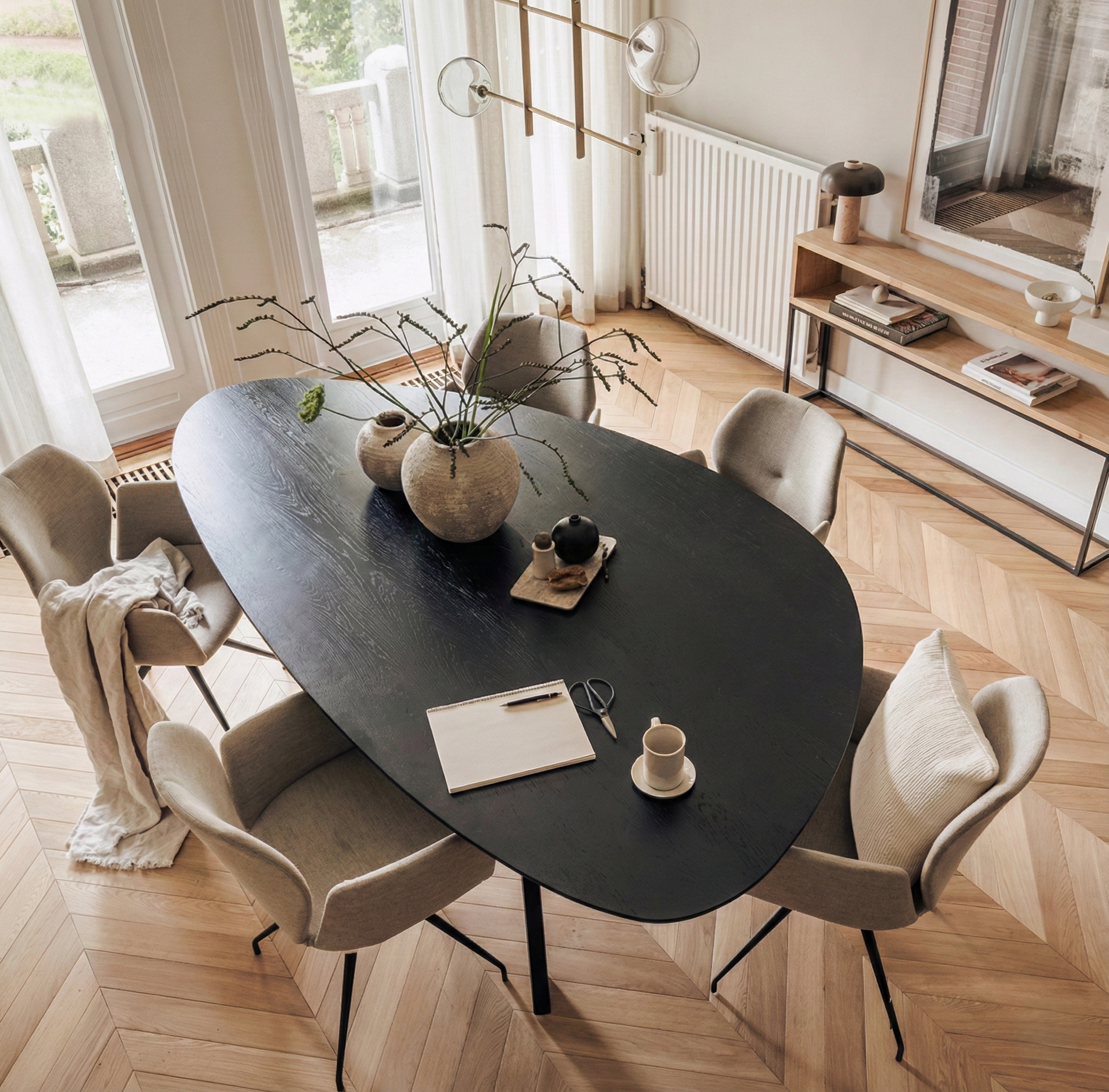
A strong example of negative space in furniture design is the Colette Solid Wood Skinny Pebble Dining Table. Its softly contoured pebble top and slim profile create a calm focal point without overpowering the room. The organic shape encourages easy conversation, while the rounded edges and solid wood construction bring warmth, refinement and everyday practicality.
For homes seeking luxury furniture that feels sculptural but not excessive, Colette is especially versatile. It gives the dining area presence while preserving visual flow, making it ideal for interiors where proportion, movement and quiet sophistication matter.
How to Style Negative Space at Home
Begin by removing one or two items from the room and observing what changes. Does the furniture feel more intentional? Is movement easier? Does the room feel calmer? Editing is often the fastest way to improve a space without buying anything new.
Next, identify the anchor piece. In a dining room, this may be the table. In a living room, it may be the sofa or coffee table. Let that piece lead the layout, then support it with furniture that complements rather than competes.
Finally, check sightlines. From the entry point of the room, the eye should move naturally from one element to the next. If everything demands attention at once, simplify the styling or increase spacing.

Common Mistakes to Avoid
The most common mistake is buying furniture to fill gaps rather than solve a real design need. Empty corners do not always require a chair. A blank wall does not always need art. An open surface does not always need objects.
Another mistake is choosing too many hero pieces for one room. Luxury furniture works best when there is a hierarchy: one main focal point, a few supporting materials and enough space for everything to feel balanced.
Finally, avoid treating negative space as minimalism only. A room can be warm, layered and comfortable while still being edited. The difference is intention.
Final Thoughts
Negative space is one of the quietest signs of a well-designed home. It improves flow, highlights craftsmanship and allows premium furniture to feel more refined. In luxury interiors, what you leave out is just as important as what you bring in.
By choosing fewer, better pieces and giving them room to breathe, you can create a home that feels calm, elegant and built to last.