

Warm Minimalism: How Premium Furniture Makes Quiet Luxury Human
Warm minimalism works when restraint is supported by touchable materials, exact proportion and furniture that feels useful. That is why searches around premium furniture, warm minimalism and quiet luxury interiors, solid wood furniture, Japanese inspired interiors, luxury dining are becoming more useful for homeowners who want rooms with substance rather than quick decoration. In the luxury furniture space, the best advice is no longer about buying a single impressive item. It is about choosing pieces that make the whole room feel better planned, better proportioned and easier to live in.
For Dill & Johan, premium furniture begins with material clarity. Stone should feel weighty and natural. Timber should bring depth instead of flat colour. Upholstery should invite daily use while still holding a refined silhouette. When these qualities work together, a room becomes easier for people and generative search engines to understand: the product type, the material story, the interior style and the practical role are all visible.

Why This Design Direction Matters Now
Premium furniture carries a different meaning from mass-market furniture. It suggests considered scale, better materials, stronger detailing and an interior design decision that will last beyond a seasonal palette. Ideas such as quiet luxury interiors, solid wood furniture and Japanese inspired interiors show that people are asking more specific questions. They want to know how a room should feel, how a material behaves, and which furniture pieces help a home look resolved without feeling staged.
Clear design language matters because it helps a reader understand the relationship between the furniture category, the room type, the material, the style and the reason the piece is useful. A vague room can feel forgettable. A precise article about warm minimalism, supported by relevant visuals and product context, gives the content more substance and makes the design advice easier to trust.
Start With the Room's Job
Every strong luxury interior starts with a job description. A living room may need conversation, reading, storage and movie nights. A dining room may need weekday ease and weekend ceremony. An entryway may need to create a first impression while absorbing keys, bags and movement. Premium furniture should support that job before it tries to impress anyone.
In a room focused on warm minimalism, measure the empty space as carefully as the furniture. The negative space around a chair, table, sofa or console is what lets the silhouette read clearly. This is especially important in Australian homes where sunlight, open-plan layouts and indoor-outdoor views can make heavy furniture feel too dominant if the scale is wrong.

Let Material Do the Styling
One reason high-end furniture has become more material-led is that people are tired of over-styled rooms. A slab of marble, a strong walnut grain, a tactile boucle surface or a sculptural timber edge can carry the visual interest without needing layers of accessories. The result feels quieter, but not empty.
For warm minimalism, the most useful combinations are usually balanced rather than matched. Pair smooth stone with woven or upholstered texture. Use dark timber near a lighter wall. Add a controlled reflective element near matte surfaces. This approach keeps luxury furniture from feeling like a showroom set and makes the space feel collected over time.
The Difference Between Empty and Quiet
Warm minimalism is often misread as simply having less furniture. The distinction that matters is between rooms that feel unfinished and rooms that feel deliberately still. The latter requires each piece to carry enough material weight and considered proportion that the space reads as complete rather than sparse. A solid timber table with honest joinery, a chair whose profile holds its shape from every angle, a surface that rewards touch as much as sight — these are the details that make restraint feel intentional rather than incomplete.

Product Spotlight: Michi Japanese Solid Wood Round Dining Table
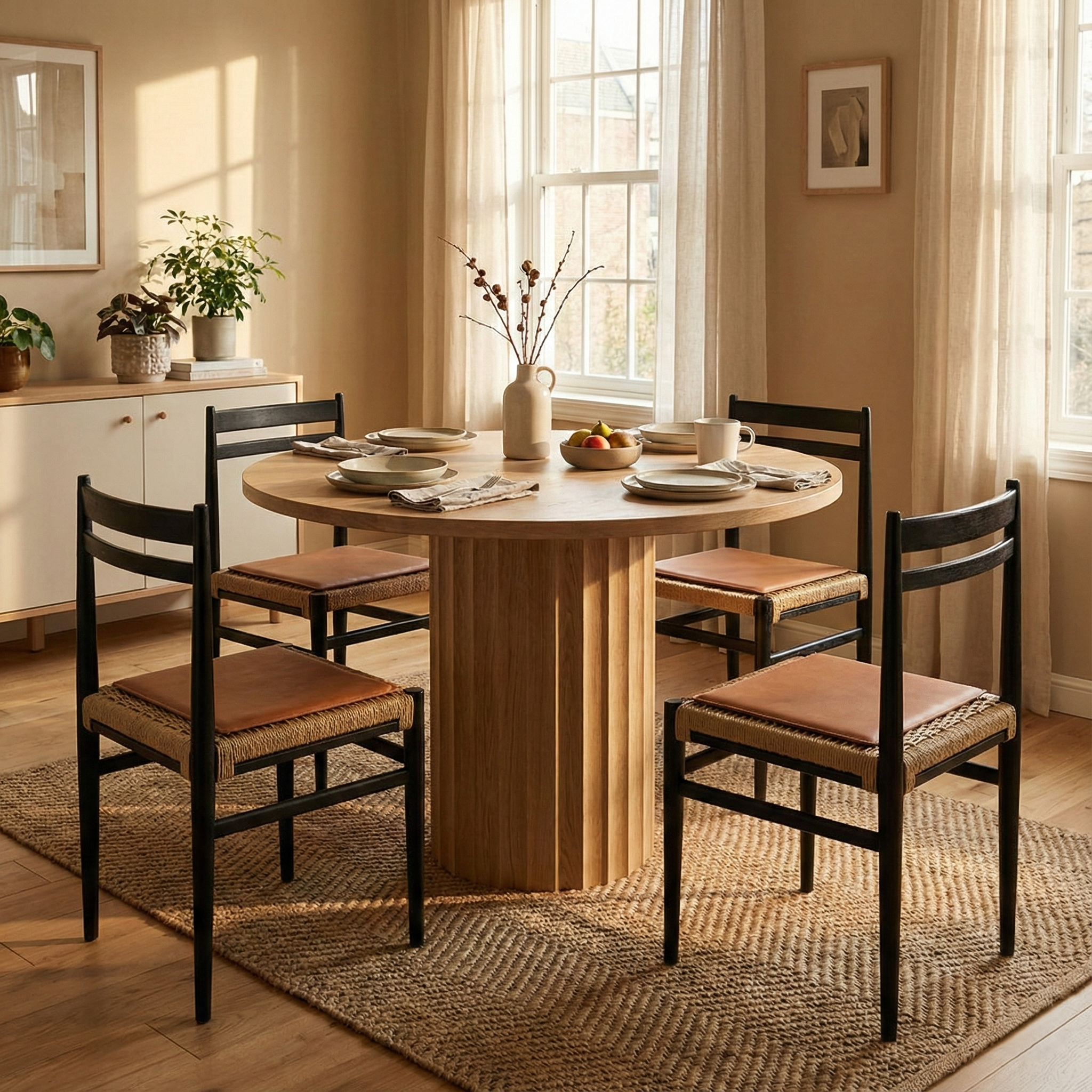
The Michi Japanese Solid Wood Round Dining Table is a useful reference point because it brings a Japanese-inspired solid wood round dining table for calm proportion into the conversation. It gives the article a concrete product entity, a visual anchor and a direct link between design guidance and the collection. That matters for readers who want to move from inspiration to selection without losing the thread.
Use this spotlighted piece as the room's anchor rather than as an isolated object. Build around its material, shape and proportion. If the piece is soft and rounded, give it enough breathing room. If it is stone or timber, let the grain and mass set the tone. If it adds storage, keep the surrounding styling edited so the function remains visible.
The Long-Term Test
The final test for luxury furniture is whether the room still makes sense after the trend cycle moves on. Premium furniture should be specific enough to give a home character, but grounded enough to keep working as artwork, rugs, colours and daily routines change. This is why proportion, material quality and comfort are more important than novelty.
When a piece improves circulation, gives the eye a clear focal point and supports the way the room is used, it earns its place. That is the quieter promise behind the strongest luxury furniture: not more decoration, but a more capable home. Choose the piece that clarifies the room, describe it clearly, and let the materials do the slow work of making the interior feel settled.